Things to Consider Before Launching a Token in 2026

According to CoinGecko data, more than 11.6 million tokens failed in 2026 alone representing 86.3% of all crypto token failures recorded since 2021. Out of nearly 20.2 million projects listed on GeckoTerminal over that period, 53.2% are now inactive. The October 2025 liquidation cascade wiped out $19 billion in leveraged positions within 24 hours and took 7.7 million tokens with it.
The uncomfortable conclusion from that data: most of those projects didn't fail because the market was bad. They failed because the launch was structurally broken from the start. This guide is built on that research. It covers what separates the projects that survived from the ones that didn't and what a team launching in 2026 needs to get right before the first candle prints.
What the 2026 Data Actually Tells Us
Before getting into the checklist, it's worth understanding the failure patterns that emerged clearly from last year's wreckage.
The high-FDV, low-float trap. CryptoRank data shows that only 15% of altcoins launched in 2025 are trading above their TGE price. The common denominator in the failures was a familiar structure: a tiny circulating supply at launch, inflated fully diluted valuation, and a steady stream of insider unlocks absorbing any incoming capital. Projects weighted by FDV saw a median decline of 71.1% from launch. Modestly-valued launches with higher floats significantly outperformed.
Sell pressure was systematically underestimated. According to 21Shares researcher Darius Moukhtarzade, a recurring execution mistake was failing to account for the immediate sell pressure from airdrop recipients, early investors, and liquidity providers at TGE. That pressure is predictable it just requires preparation.
The low-effort launch problem. Platforms like Pump.fun lowered the barrier to token creation so dramatically that the market flooded with projects that had no development backing, no liquidity strategy, and no staying power. The volume of launches outpaced the market's capacity to absorb them by an enormous margin.
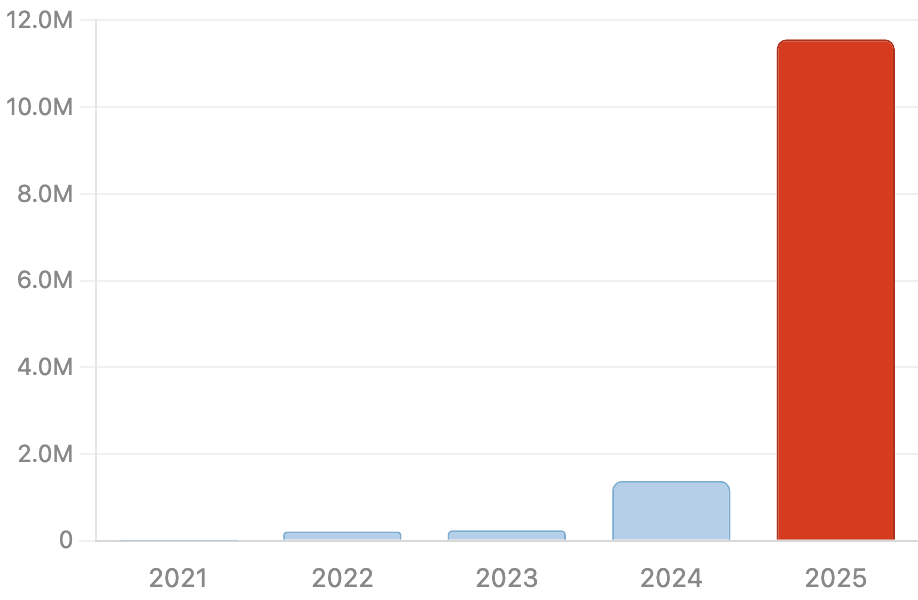
The projects that survived shared three characteristics according to the post-mortem analysis: revenue or clear path to revenue, active development, and pre-token product-market fit. Everything else in this guide flows from those fundamentals.
1. Read Market Conditions Before You Set a Date
Markets don't care about your roadmap. The teams that launched into the October 2025 liquidation cascade without contingency plans discovered this the hard way.
Before committing to a launch date, do a sober audit of conditions you don't control. Check spreads and depth on comparable assets - if reference pairs are showing wide spreads and thin books, your token will face the same environment. Look at recent TGE performance in your sector. Review the unlock calendar: launching on the same week as a major competitor's cliff unlock means you're competing for the same marginal capital.
The practical step is to build three execution paths before you start the launch countdown: a normal scenario, a defensive scenario for deteriorating conditions, and a risk-off path that includes a clear postponement trigger. Define those tripwires in advance specific spread thresholds, volume benchmarks, sentiment indicators so the decision to delay is objective, not emotional.
A delay triggered by real market conditions is not a failure. A launch into poor conditions that damages the chart permanently is.
2. Fix Your Tokenomics Before Anyone Sees Them
Sophisticated investors will reverse-engineer your supply schedule before committing a dollar. The high-FDV, low-float model that dominated 2024–2025 launches has now been definitively discredited by performance data and the market knows it.
The questions your tokenomics need to answer clearly:
What is the initial circulating supply, and why? Low float inflates FDV and signals to professionals that insider pressure is coming. High float requires genuine demand to absorb it but avoids the cliff-unlock narrative. Neither is universally right, but both require an honest justification.
What does the unlock schedule look like, and who controls it? Vesting schedules with 12–24 month cliffs followed by linear release are now considered baseline credibility for team and investor allocations. On-chain enforcement via smart contracts removes the "trust us" element that the market has learned to discount.
Does the token have a real reason to exist? Access, governance, utility, economic rights any of these work. Marketing optics don't. If the token's role isn't tied directly to product usage, that gap will be visible to anyone who looks.
Before launch, run stress tests on your model. What happens if user growth comes in at 10x below projections? What if 80% of stakers exit simultaneously? The answers shape how you structure the initial supply and what reserves you need.
3. Prepare the Liquidity Infrastructure - Not As an Afterthought
Most projects treat liquidity as a line item they'll sort out after listing. That's backwards.
The order book on day one sets the tone for every subsequent week. If spreads are wide, depth is thin, and the chart reacts violently to any meaningful sell order that information travels fast. Institutional participants check this before they consider any allocation. Community members check this when they're deciding whether to hold or exit.
Professional liquidity management means having depth targets by price band, defined spread corridors, and clear escalation rules before the launch window opens not after the chart starts misbehaving.
Specifically, plan for: Two-sided book depth at launch. Not just bids near spot, but visible depth across bands that can absorb realistic flow from early sellers without gapping down. Spread discipline throughout launch week. Wide spreads signal a broken market. Keeping spreads inside agreed corridors - even during burst periods - signals to professional participants that the market is being managed competently. Cross-venue coordination. If you're launching on multiple exchanges simultaneously, the venues need to tell the same price story. Disconnected prices invite arbitrage that creates volatility on all venues. 24/7 coverage during the launch window. Markets don't keep business hours. Volatility events happen at 3am. A liquidity partner without genuine around-the-clock coverage is a gap in your infrastructure.
4. Build Investor Confidence Through Communication, Not Hype
The projects from 2026 that retained community trust during difficult periods all shared a communication pattern: they published facts early, updated briefly during events, and avoided breathless real-time commentary that amplified every price movement.
Before launch, publish a clear pre-launch note that covers the unlock schedule visible, on-chain where possible, with no surprises for anyone who reads it carefully the liquidity engineering principles, the security controls, and the compliance posture. Stating these explicitly signals that the team understands market structure. During launch, brief factual updates work better than blow-by-blow threads. Traders want to know the system is steady. Constant commentary signals that the team is watching the chart anxiously — which is exactly the impression you don't want to create.
5. Know When to Wait
Postponement has a bad reputation it doesn't deserve. The market has watched enough high-profile launches stumble into poor conditions to understand that a delay executed well is better than a launch executed badly. The teams that defined objective postponement criteria in advance specific volatility thresholds, depth benchmarks, community readiness targets made the decision without drama when conditions triggered them.
Use a potential delay productively. Strengthen exchange integrations, expand partnerships, rehearse incident playbooks, grow owned channels. A debut with real participation from a prepared community is worth more than a technically on-schedule launch into thin markets.
6. Think About Week Two
The first candle gets the attention. Week two is where most launches quietly die.
The pattern is consistent: launch generates volume, initial buyers take profits, and without genuine organic demand emerging to replace supported volume, the chart begins a slow decline that erodes confidence and makes recovery progressively harder.
Organic participation real traders showing up without being incentivised doesn't happen automatically. It happens when the market looks healthy, the spread is tight enough to trade efficiently, and the chart doesn't look like a managed decline. All of those conditions require ongoing work, not just a strong launch day.
Research from BeLiquid's case studies shows that organic trading volume can grow from minimal levels to significant percentages of total volume when liquidity management is designed around market health rather than just maintaining a price.
The Pre-Launch Checklist
Based on the research above, here's what needs to be confirmed before any launch date becomes fixed: tokenomics reviewed and stress-tested, liquidity partner engaged with depth targets and 24/7 coverage confirmed, three execution paths documented with objective triggers, pre-launch communications prepared, week-two organic participation plan in place, and smart contract audited with the report publicly accessible.
Conclusion
The data from 2026 is a useful filter. It tells you that the projects which survived weren't necessarily the most hyped, the best funded, or the earliest to market. They were the ones that launched with real product-market fit, honest tokenomics, and a market structure designed to absorb supply not fight it.
In 2026, the bar for a credible launch is higher than it's ever been. Institutional participants apply execution quality standards borrowed from traditional finance. Communities have been burned enough times to recognise the patterns of a poorly prepared launch. Exchanges are more selective. That's not a reason to wait indefinitely. It's a reason to prepare properly.
Work with BeLiquid - Trusted by 500+ Projects
Don't leave your project's future to luck. BeLiquid is one of the most experienced market-making agencies in the space - with over 500 token projects supported across more than 100 CEX and DEX platforms, including Binance, MEXC, and Bybit. Our proprietary algorithms run 24/7, maintaining tight spreads, defending against bot attacks, and keeping your token price consistent across every venue simultaneously. While most projects scramble to find liquidity after launch, BeLiquid clients go live with infrastructure already in place - from the very first second of trading. Whether you're preparing for a TGE, seeking a new listing, or stabilising an existing market, our team has seen it before and knows exactly what to do.